Digital Signage Examples for 12 Industries
Practical digital signage examples for 12 industries, from restaurant menu boards and retail windows to factory dashboards, clinics, schools and hotels.
Looking for digital signage examples you can adapt? The most useful ones are practical: a menu board that switches from breakfast to lunch on its own, a retail window that changes with every campaign, a factory screen that shows safety messages by shift, or a clinic waiting room that explains what happens next. Below are digital signage examples for 12 industries, each with what to show, where the screens go and what makes the content work. Use them as a starting point, then pick the one or two that solve your most frequent problem and test them on a single screen before rolling out.
How to use these examples
Every example follows the same pattern: a screen in a specific place, content with one clear job, and a schedule that keeps it current. The hardware is rarely the hard part; most screens are a display, a player and digital signage software that manages them. What separates good examples from forgettable ones is focus: one message per screen, readable from the distance people actually stand, and refreshed often enough to stay noticed.
For the basics behind every example, see the complete guide to digital signage software.
Food, drink and retail
1. Restaurants and quick-service
Daypart menu boards above the counter that switch automatically between breakfast, lunch and dinner. Limited-time offers that launch on every screen the same day and end on their own. Drive-thru boards updated remotely. Order-ready screens near the pick-up area. See restaurant digital signage and the 10 restaurant use cases.
Where the screens go: above the counter, at the drive-thru and near pick-up. A chain usually standardises one layout per screen position so every store reads the same way, and varies only prices and local items.
2. Cafés and bakeries
A single menu screen with prices and photos of best sellers. Morning versus afternoon content, such as coffee and pastries early, lunch items later. A short motion loop of a hero product near the till. Small teams benefit most from templates, so updates take minutes. More in the digital menu boards guide.
Where the screens go: behind the counter at eye level from the queue. One screen is often enough; the gain comes from changing the content through the day instead of leaving the full menu up from opening to close.
3. Retail stores
Window displays with one bold offer for people walking past. Entrance screens that point to the promotion of the week. Aisle and end-cap loops that support a category. Checkout screens for loyalty sign-ups and last-minute offers. See retail digital signage and digital signage for retail.
Where the screens go: facing the street, at the entrance, at the end of key aisles and at checkout. Each position needs its own content: the window shouts one offer, the aisle explains a product, the till nudges a last purchase.
4. Supermarkets and grocery
Weekly promotions scheduled per store. Fresh-counter screens for the bakery, deli or butcher. Seasonal campaigns that start and end automatically. Supplier content for featured brands, managed with clear schedules. More in supermarket digital signage.
Where the screens go: at the entrance, above fresh counters and at checkout. Because promotions change weekly and differ by store, scheduling and screen groups matter more here than in almost any other industry.
Workplaces and industry
5. Offices and corporate
Reception welcome screens that greet visitors by schedule. Meeting room displays with room names and schedules. Internal news and dashboards for teams in open-plan spaces. Directions to rooms and facilities. See office digital signage and conference room displays.
Where the screens go: reception, outside meeting rooms, in kitchens and near lifts. Office screens work best when someone owns them, usually facilities or internal communications, and content changes at least weekly.
6. Healthcare clinics and hospitals
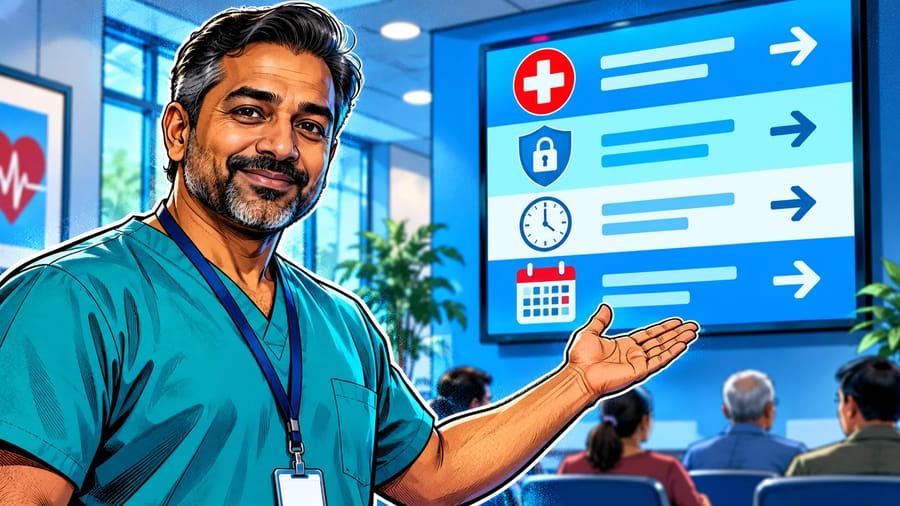
Waiting room screens with services, opening hours and how to prepare for a visit. Wayfinding from reception to departments. Health and wellbeing content that is calm and readable. Staff screens in back-of-house areas. Never show personal data on shared screens. See healthcare digital signage and waiting room information screens.
Where the screens go: waiting rooms, reception, corridors at decision points and staff areas. Pacing is slower than in retail: longer slides, gentle motion and content that answers the questions patients actually ask at the desk.
7. Manufacturing and warehouses
Safety messages and PPE reminders in every zone. Shift information and handover notes in break rooms. Production dashboards showing targets against actuals, using live dashboard apps. Recognition and company news for teams without desks. See manufacturing digital signage and digital signage for manufacturing.
Where the screens go: at entrances, in break rooms, near lines and in loading areas. Industrial screens often need dedicated players on wired networks and displays rated for long hours and dusty environments.
Public spaces, travel and hospitality
8. Schools, colleges and universities
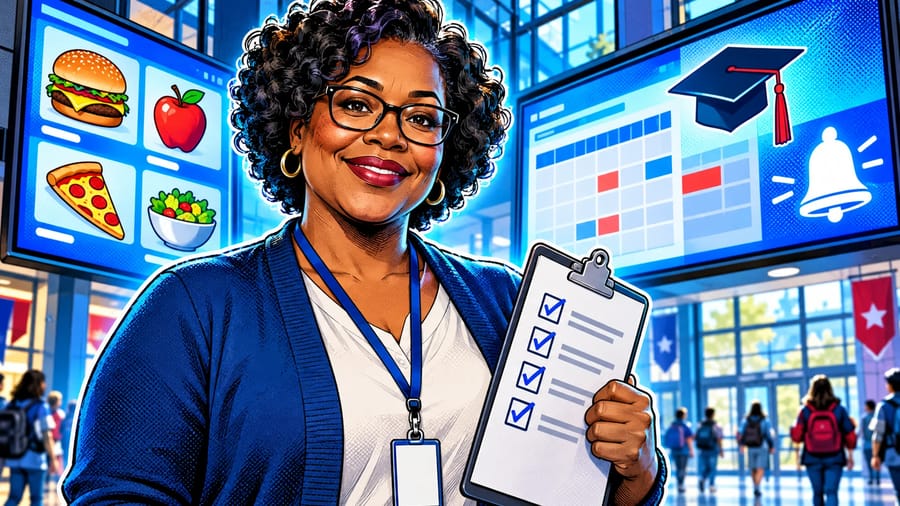
Entrance announcements and daily schedules. Event promotion for open days, performances and sports. Wayfinding for visitors and new students. Urgent notices pushed to every screen at once. See education digital signage.
Where the screens go: main entrances, corridors, canteens and libraries. A central team usually manages campus-wide messages while departments add their own content to specific screen groups.
9. Transportation and transit
Departure and service information on platforms and in waiting areas. Wayfinding at junctions and entrances. Service updates when routes or schedules change. Safety reminders for passengers. See transportation digital signage and digital wayfinding.
Where the screens go: platforms, concourses, waiting areas and entrances. Reliability matters most here, so dedicated players, wired connections and clear fallback content are worth planning from day one.
10. Hotels and hospitality
Lobby welcome screens and event schedules for groups and conferences. Restaurant and bar menus that change through the day. Amenity promotion for the spa, pool or special packages. Local guides with weather and nearby tips. See hospitality digital signage.
Where the screens go: the lobby, outside function rooms, in restaurants and near lifts. Hotels often schedule event screens per booking, so a group sees its welcome message only on the day it arrives.
Services and leisure
11. Gyms and fitness centres
Class timetables for the day and week. Membership offers and challenges. Motivational content and short exercise tips near equipment. Opening hours and holiday changes updated remotely. Gyms usually run several screens with different content per zone, so screen groups keep it manageable.
Where the screens go: reception, studio entrances, the main floor and changing room corridors. Bright, high-contrast content works best in spaces with mixed lighting and people on the move.
12. Banks, real estate and service offices
Queue and waiting area screens that explain services and what documents to bring. Product information such as accounts or services, kept compliant and up to date from one place. Property listings in agency windows that change as listings change. Opening hours and contact information. Content in regulated industries should be reviewed before it is scheduled.
Where the screens go: waiting areas, service counters and street-facing windows. Window screens in agencies need high brightness, while counter screens should stay calm and informative.
What the best examples have in common
One job per screen. Each example has a clear purpose: sell, inform, guide or reassure.
Readable at a glance. Large type, strong images and short messages work in every industry.
Scheduled, not static. The examples that keep attention change by time of day, campaign or shift.
Managed centrally. When screens sit in several places, a single dashboard with screen groups turns updates into a few minutes of work. Pilosign manages every screen from one dashboard and publishes remote updates to one screen, a group or every location.
Frequently asked questions
Which example is easiest to start with? A menu board, a reception screen or an information screen on an existing TV. Each needs one screen, a player and a template.
Can I combine several examples on one screen? Yes, as a short loop, but keep each item brief. Separate screens are better when the jobs are very different.
Do these examples need special hardware? Mostly not. A display, a supported player such as a dedicated player, Android TV or Amazon Fire TV, and a connection are enough for most of them. Windows and outdoor screens need brighter displays.
How often should content change? At least with every campaign or season, and ideally by time of day for menus and promotions.
Turn an example into your first screen
Pick the example closest to your business, connect one screen and run it for a few weeks before adding more. Browse all industries, start with free digital signage software or talk to us about your rollout.